From an Ohio Kitchen Shelf to a Kyoto Bench: The Long Way Home for One Broken Bowl

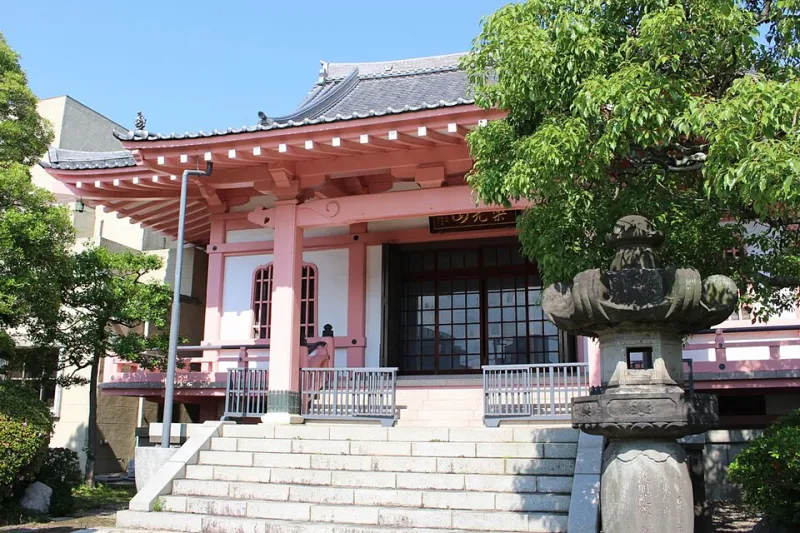
Photo: Thomas Iser, CC BY-SA 4.0, via Wikimedia Commons
The bowl sat in a padded mailer on Margaret Ellison's kitchen counter in Columbus, Ohio, for eleven days before she could bring herself to ship it. It had belonged to her grandmother, had survived four moves and two grandchildren, and had finally met its end against the edge of a granite countertop on an ordinary Tuesday evening. The crack ran clean from rim to foot — fatal, by any ordinary standard of household repair.
What Ellison did next places her in a small but growing company of Americans: she flew the bowl to Japan.
The Economics of Letting Go
Domestic kintsugi services exist in the United States, and several are competent. Many use modern adhesives, finish with mica-based gold substitute, and return a piece within weeks at a price under two hundred dollars. The Kyoto workshop Ellison chose quoted her the equivalent of roughly nine hundred dollars and a waiting period of eight to nine months.
She paid it anyway. "I kept asking myself what I was actually buying," she says. "And I realized I wasn't buying a repair. I was buying the fact that someone would sit with this thing for the better part of a year."
That distinction — between fixing an object and attending to it — is the fault line that sends American ceramics, heirlooms, and museum-grade wares across the Pacific. Traditional urushi kintsugi uses the sap of the lacquer tree, applied in thin layers that must cure in humidity-controlled conditions between coats. Genuine gold is often reserved for the final seam. There is no shortcut that respects the material; the sap simply will not harden on an artificial schedule.
What the Workshop Asks
Ellison's correspondence with the workshop, conducted through translated emails, followed a rhythm she found disorienting at first. The restorer asked not only for photographs of the damage but for the bowl's history — who had used it, what it had held, whether the crack had a story. He asked whether she wanted the fractures emphasized or quieted. He warned her, twice, that the result would not look new.
"In America, a repair is successful when you can't see it," she says. "Here, the whole point was that you could."
This inversion is the philosophical core of kintsugi, and it is the part that cannot be exported alongside the lacquer. The gold seam is not concealment. It is testimony — an acknowledgment that the object's history includes its breaking, and that the breaking did not end its usefulness. American collectors who make the journey repeatedly describe the same realization: they had been seeking invisibility when what they needed was honesty.
The Surrender Problem
The nine-month wait is not merely a backlog. It is built into the chemistry. Each layer of urushi requires weeks of curing; a bowl with a long fracture may need a dozen or more applications. The restorer cannot be rushed, and the client cannot watch. Ellison describes the mid-process silence — months with no photographs, no updates, no reassurance — as the hardest part of the experience.
"I wanted a tracking number for my grandmother's bowl," she laughs. "What I got instead was a lesson in not being the manager of everything."
Conservators in the United States have noted the same cultural friction. American conservation practice, shaped by institutional mandates of reversibility and documentation, treats the client as a stakeholder with rights of oversight. The Japanese atelier model treats the client, more or less, as a guest — welcome, informed, and ultimately not in charge. For collectors accustomed to certificates, condition reports, and progress portals, the handoff can feel like an act of faith.
Perhaps that is the point. Several repeat clients describe the waiting itself as part of the treatment — a forced deceleration that changes their relationship to the object before it ever returns.
The Return
The bowl came home in October, packed in a paulownia wood box lined with silk. The crack had become a river of gold, restrained rather than flamboyant, running from rim to foot like a line drawn once, without hesitation. Ellison keeps it now on a shelf instead of in a cabinet — visible, touched, used for tea on her grandmother's birthday.
"It's worth more broken than it ever was whole," she says. "Not financially. I mean it actually means more. The breaking is part of it now instead of the end of it."
Whether the growing pipeline of American heirlooms to Japanese workshops represents a trend or a slow education is difficult to say. What is clear is that the objects coming back are different from the ones that would have come back from a domestic bench — not better repaired, perhaps, but differently understood. The repair, in the end, was never really about the bowl.