Beyond the Zen Preset: What American Producers Keep Missing About the Koto
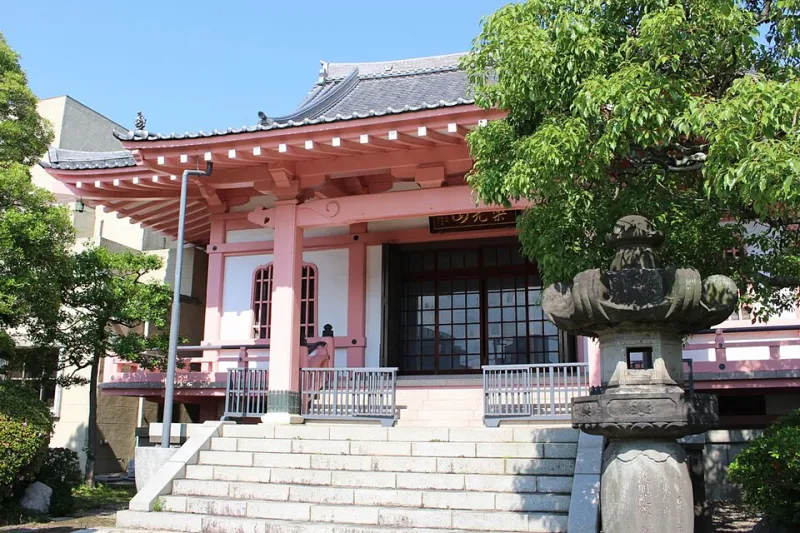
Photo: Mizushimasea, CC BY-SA 4.0, via Wikimedia Commons
Somewhere in a sample library on a hard drive in Los Angeles right now sits a folder labeled 'Zen.' Inside it: a koto pluck, a shakuhachi breath, a shamisen strum. Each has been cropped, reverbed, and pitched to sit under a rain sound. Each has been stripped of nearly everything that made it worth recording.
American ambient producers have embraced Japanese instruments with genuine enthusiasm — and, according to the musicians who actually play them, with remarkably little curiosity. The result is a genre-wide flattening in which three distinct, technically demanding instruments become a single mood: 'serenity,' sold by the loop.
Three Instruments, One Cliché
'The first thing I notice is tempo,' says a Tokyo-based koto player who has sat in on dozens of Western sessions, most of them remote. 'Producers hear the koto as slow. But the instrument is capable of extraordinary rhythmic agility. When every demo arrives at sixty beats per minute with a reverb tail of four seconds, I know they did not listen to the instrument. They listened to an idea of it.'
The shakuhachi suffers differently. Originally a tool of meditation for komusō monks, its breathy tone has been reduced in Western libraries to a single gesture — the long, wavering note that says 'temple.' Ethnomusicologists point out that the instrument's repertoire is built on precision of pitch-bending and breath control so demanding that mastery takes decades. The sample keeps the waver and discards the discipline.
The shamisen, meanwhile, is perhaps the most misrepresented of all. Its sharp, percussive attack and buzzing sawari tone were built for drama — kabuki stages, folk narrative, the restless energy of Edo-period nightlife. Casting it as a gentle 'east Asian texture' is a bit like sampling a banjo and marketing it as pastoral calm.
What the Instruments Actually Say
The deeper problem is not technical but interpretive. In Japanese musical practice, these instruments developed inside specific contexts — the koto within court and chamber traditions, the shakuhachi within religious practice, the shamisen within popular theater. Each carries a vocabulary of gesture: the koto's left-hand presses that bend a note after it is struck, the shakuhachi's meri and kari head positions that shade a pitch into emotional territory no equal-tempered keyboard can reach.
When a producer drops a single sampled pluck into a track, all of that grammar disappears. What remains is timbre without syntax — a beautiful voice saying nothing.
A Better Framework for Borrowing
None of this argues for leaving Japanese instruments alone. It argues for engaging with them as instruments rather than moods. A few principles, drawn from conversations with players and scholars:
Learn one piece before you sample one note. Listen to a full recording of a classical koto work or a shakuhachi honkyoku. Notice how notes begin, sustain, and decay — and how much of the music lives in the transitions.
Sample the hands, not just the sound. The articulations — the scrape, the bend, the breath — are where the character lives. A library of gestures beats a library of notes.
Credit the tradition, not just the file. If your track leans on the koto, name the instrument accurately, and where possible, the player. Session musicians in Japan are reachable, affordable, and consistently astonished by how rarely they are asked.
Accept that 'zen' is not a genre. Restraint, space, and silence are real values in Japanese aesthetics, but they are practices, not presets. A track built on genuine understanding of ma — the expressive power of interval — will sound more Japanese than any rain-looped koto sample ever will.
The Reward for Doing It Right
There is a hopeful footnote. A growing number of American producers — several working out of Portland, Asheville, and the Hudson Valley — have begun commissioning custom recordings rather than reaching for stock libraries, and some have traveled to study briefly with teachers in Japan. Their tracks sound different. Not 'more authentic,' whatever that means, but more alive: the koto bends where a koto would bend, the shakuhachi breathes where a breath belongs.
The instruments have survived centuries of change. They can survive a DAW. What they cannot survive is being heard without being listened to — and the producers who take the time to listen are discovering that Japan's instruments have far more to say than 'calm.'