Sixty Minutes of Silence: Inside a Tokyo Tuning Session That Rewired an American's Ears
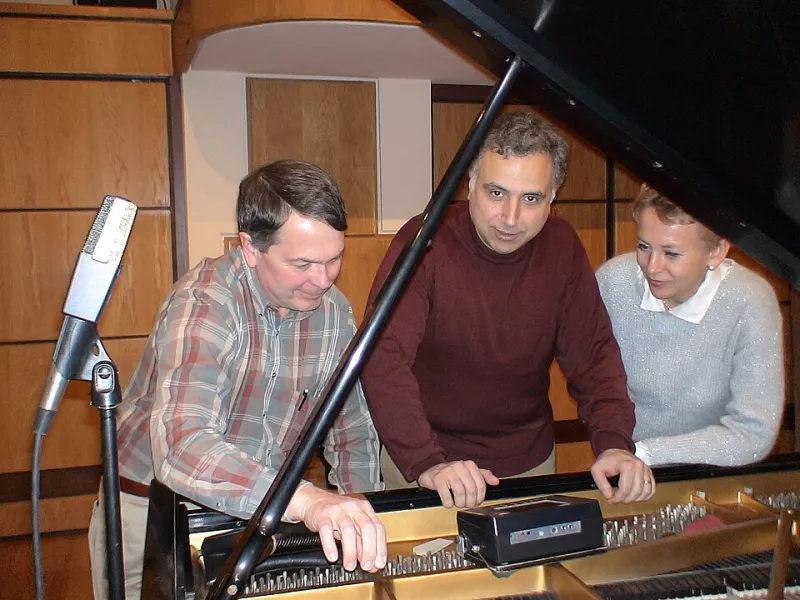
Photo: User:Raff645, CC BY-SA 3.0, via Wikimedia Commons
The first thing Daniel Reyes does when he enters Master Hiroshi Tanabe's tuning studio in Tokyo's Suginami ward is nothing at all. He sits. He waits. For the opening minutes of every session, the American piano technician says nothing, touches nothing, and simply lets the room settle around him.
"In Chicago, I'd walk in, open my kit, and get to work within five minutes," Reyes says. "Here, the work begins before the work begins."
Reyes, who tunes for two Midwestern orchestras and a rotation of touring soloists, has made the transpacific journey twice a year for the past six years — a pilgrimage that costs him vacation days, income, and, by his own admission, some professional pride. What he gains in return, he says, cannot be measured in cents on a strobe tuner.
A Different Definition of Precision
American conservatory training teaches technicians to eliminate error. Deviations from equal temperament are corrected; string tension is standardized; the goal is a piano that behaves identically from the lowest bass note to the highest treble. It is, Reyes notes, an engineering mindset — and a good one.
What he encountered in Tokyo was something adjacent but distinct: a philosophy in which precision serves the room, not the chart.
"Tanabe-san will tune a unison, and I'll measure it and it's a hair off from where I'd put it," Reyes explains. "Then he plays the passage the pianist is performing next week, and suddenly that 'error' is the reason the phrase breathes. He's not tuning to a standard. He's tuning to a context."
This contextual approach — where the instrument, the repertoire, the hall's acoustics, and even the season's humidity are treated as collaborators in the final sound — runs counter to the technician-as-repairman model Reyes was raised in. In Tanabe's studio, the technician is closer to a duet partner. The piano has opinions. The job is to hear them.
The Session, Minute by Minute
On a humid June afternoon, Reyes agreed to walk me through a single tuning session as it unfolded, from the outside in.
Minutes 0–10: The Silence. No tools come out. Tanabe plays a short program — a Scarlatti sonata, then a passage of Takemitsu — on the instrument to be tuned. He is not warming up the piano; he is interviewing it. Reyes has learned to use these minutes to do the same, noting where the piano resists, where it sings, where it seems tired.
Minutes 10–25: The Foundation. Tanabe begins in the bass, but not with a tuning hammer in the way an American technician would recognize. His strikes are slower, softer, spaced deliberately. "He's listening to how the string recovers between strikes," Reyes says. "The recovery tells him more than the pitch. It's like a doctor taking a pulse instead of just reading a number."
Minutes 25–45: The Conversation. The temperament section — the heart of any tuning — takes nearly twice as long as it would in a typical US concert prep. Tanabe pauses constantly, playing intervals back and forth, sometimes leaving a note for several minutes before committing. Reyes once asked why the delays. The answer, translated: "A string that was just moved is still thinking. You cannot hear what it truly is until it stops thinking."
Minutes 45–60: The Test. Tanabe finishes not with a checklist but with music again — the same pieces from the opening. The loop closes. If the piano plays differently than it did at the start, in a way that serves the player, the session is a success regardless of what any meter would say.
What He Brings Home
Reyes is careful not to exoticize what he's learned. "This isn't magic, and it isn't even uniquely Japanese — plenty of great American tuners work intuitively," he says. "But the framework here gives that intuition structure. The patience is codified. The listening is the curriculum."
Back in Chicago, the changes are practical and subtle. He schedules longer appointments and charges for them. He plays repertoire before and after every tuning. He has stopped correcting certain small inharmonicities that his measurements flag but his ears — retrained over six years — now understand as character.
His clients have noticed. One soloist, he says, told him the piano sounded "less like a machine and more like a room." He considers it the best review of his career.
Why the Flight Is Worth It
There are, Reyes admits, cheaper ways to study. Books exist. Videos exist. But the twice-yearly trips are non-negotiable, because what Tanabe teaches cannot be transmitted through a screen: the posture, the pacing, the willingness to let sixty minutes contain ten minutes of deliberate stillness.
"Every time I go, I come back having lost a technique I thought I needed," Reyes says. "That's the strange gift. You fly twelve thousand miles to learn what to stop doing."
He'll be back in Suginami in December, sitting in silence while the piano thinks, waiting for a string to stop thinking too. The instrument, under this philosophy, is never finished — only, for now, in conversation. And the technician, properly understood, is not its mechanic but its most careful listener.