One Hertz Apart: The Quiet Diplomacy Behind America's Borrowed Pitch
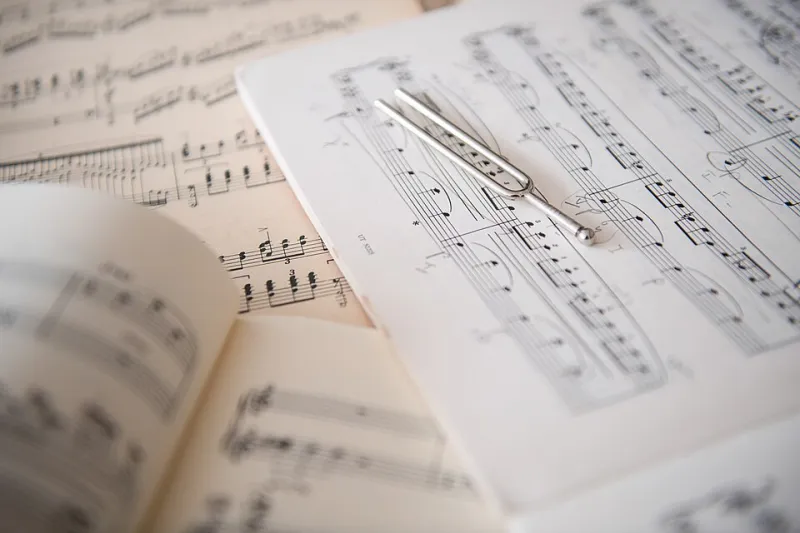
Photo: Lukasz Kobus, European Commission, CC BY 4.0, via Wikimedia Commons
Every orchestra in America tunes to a number. Most audiences never hear the number spoken aloud; they simply hear the oboe sound the A, the strings answer, and the evening begins. But behind that brief, unifying tone sits a history of negotiation, craftsmanship, and cross-Pacific respect that deserves telling.
The Number Nobody Agreed On
Pitch, for most of music's history, was a local affair. Baroque Vienna tuned high; Paris tuned low; the same violin could sound a different instrument depending on the city it played in. The twentieth century brought the promise of standardization — 440 hertz was codified internationally in 1939 and adopted by the American Standards Association shortly after. On paper, the matter was settled.
In practice, it was not. Orchestras discovered that a slightly sharper pitch — typically 442 or even 443 hertz — gave strings a perceived brilliance that conductors and soloists came to crave. Instrument builders, meanwhile, faced a dilemma: every increment of pitch altered the tension on a soundboard, the response of a reed, the voice of a bell.
It was in this unsettled terrain that Japanese instrument makers entered the American conversation.
The Tokyo Delegation
In the postwar decades, as Japanese manufacturing earned its reputation for precision, a quiet exchange began. American instrument importers and repair technicians traveled to Tokyo, Nagoya, and Hamamatsu; Japanese makers, in turn, studied American performance practice. What they found on both sides was not disagreement so much as divergence in philosophy.
American workshops tended to treat pitch as a fixed target — calibrate once, ship, done. Japanese makers approached it as a living property of the instrument, tied to climate, humidity, and the player's breath. Their tuning forks and calibration instruments were made not merely to produce a frequency but to hold it, to endure, to be trustworthy across decades of use.
American technicians who handled these tools often described the experience in almost moral terms. A tuning fork that rings true for fifty years is not an accident of metallurgy; it is a statement about what a maker owes the future.
Why the Sharper A Won
By the 1980s, a growing number of American ensembles — particularly those collaborating with East Asian soloists and touring orchestras — had drifted toward 442 hertz. The shift was rarely announced. It happened in rehearsal rooms, in the preferences of visiting conductors, in the specifications American dealers began requesting from their suppliers.
The Japanese contribution was not that they invented the sharper pitch; European ensembles had used it too. Rather, it was that Japanese makers built the instruments, calibration tools, and — crucially — the consistency of manufacture that made such a standard practical. A pitch standard is only as good as the instruments that can hold it, and the American market came to trust Japanese precision on exactly this point.
What Convergence Reveals
There is a lesson here that extends well beyond music. The adoption of a shared pitch was not a case of one culture surrendering to another. It was a convergence built on mutual recognition: American musicians acknowledging that another tradition had solved a problem they had not, and Japanese craftspeople adapting their methods to serve a repertoire and a performance culture not their own.
In the philosophy of Japanese craft, this is a familiar posture. The maker does not impose; the maker responds. The tool is shaped by the task, and the task is honored by the tool. When an American oboist today sounds an A at 442 hertz, she is participating — unknowingly, perhaps — in that exchange of respect.
Listening Differently
For the American concertgoer, none of this requires action. It requires only attention. The next time the hall falls silent and a single sustained tone rises from the stage, consider what it carries: a century of negotiation, two craft traditions meeting in the middle of the Pacific, and the quiet insistence that even a single note can be an act of cultural diplomacy.
Music, at its best, is not merely performed. It is agreed upon. And every agreement, however small, leaves a trace of the hands that made it.