The Temple Gave Him the Mix: An American Producer's Year of Recording Silence in Kyoto
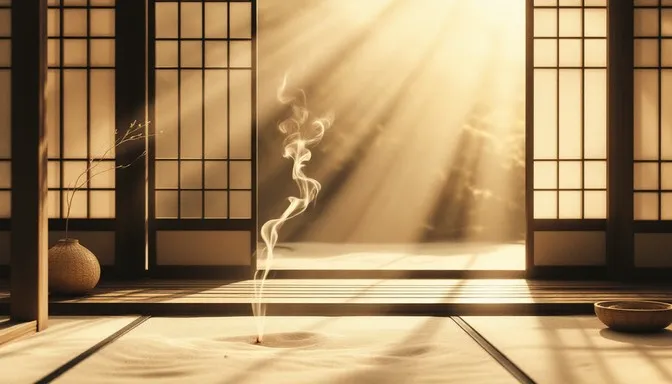
Photo: Kyoto temple wooden interior paper screens morning light, via images.stockcake.com
The first thing Daniel Reyes recorded in Kyoto was not music. It was a broom.
The temple's groundskeeper, sweeping gravel outside the main hall at dawn, had no idea he was performing. Reyes, a veteran Los Angeles producer with credits across indie rock and film scores, had booked nine days at a working sub-temple in the city's northeast hills to track an ambient album. He arrived with a plan: capture the temple's legendary quiet, then layer his own compositions over it in his Hollywood studio afterward.
He scrapped that plan on day two.
The Room Refused to Cooperate
"I kept waiting for the silence," Reyes says, "and the silence never came."
What came instead was everything else. The wooden bell — the mokugyo — struck at irregular hours. Footsteps on creaking veranda boards. The distant murmur of monks chanting sutras, bleeding through paper screens in a way no plug-in could simulate. Rain on the temple roof, a texture so specific that Reyes eventually recorded forty minutes of it, alone, as source material.
His instinct, trained in treated rooms and vocal booths, was to fight the noise. Isolate the source. Clean the signal. That instinct, he now says, was the problem.
A Japanese engineer he'd hired locally, a soft-spoken man in his sixties who asked to be identified only as Mr. Tanaka, offered a correction that Reyes has repeated in interviews ever since: "You are trying to record the instrument. You should be recording the room. The room is also an instrument."
Ma, Noise, and the American Ear
The concept that reshaped the record — and Reyes's career — was ma, the Japanese notion of the meaningful interval, the space between. He'd read about it before. He'd even name-checked it in liner notes. But hearing a chant dissolve into the natural reverberation of a 400-year-old hall, with no artificial tail applied, was different from reading about it.
"In LA, reverb is a purchase," he laughs. "In that temple, it was a fact of physics. The building was the reverb unit. And it had been tuned by four centuries of use."
Equally formative was the temple's relationship to unintended sound. Where American production culture treats noise as failure — the hum to be gated, the cough to be edited out — the temple's daily soundscape made no such distinction. The broom was not an interruption of the morning. It was the morning.
Reyes began leaving his microphones open during breaks. Then during meals. Then overnight. When he returned to Los Angeles with roughly ninety hours of recordings, less than ten hours of it was what he would have once called "the session."
Mixing by Subtraction
The album that emerged — eventually titled Kuriya, after the temple's kitchen building — was assembled not by adding layers but by removing them. Reyes describes his mixing process for the record as "gardening": identifying the accidental bells, footsteps, and chants that carried emotional weight, and cutting everything that competed with them.
"There's a track where you hear a monk's sandals on stone for almost a full minute before any of my instruments enter," he says. "My label wanted that trimmed. I told them, trim the instruments instead."
The approach has followed him back into conventional work. Producers who have hired him since describe a noticeable shift: longer pre-roll, more room tone left in final mixes, a willingness to let a take breathe rather than comping it to death. One Nashville engineer who sat in on a Reyes session put it bluntly: "He mixes like someone who spent a week listening to a building."
He did, of course. That was the point.
Why American Studios Should Care
Reyes is careful not to exoticize the experience. He is not Japanese, he notes, and a week of observation does not confer understanding of a tradition. But he does believe American creators have something genuine to learn from the temple's acoustics of attention — the practice of listening to a space before deciding what belongs in it.
His advice to young producers is characteristically simple: "Book the ugliest room you can find. Record it for an hour with nothing happening. Listen back. Everything you want to do after that will be better."
The temple, for its part, has hosted two more recording projects since Reyes's session — both by artists who heard his record and asked Mr. Tanaka the same question: When can we come?
The broom, presumably, is still performing.