Silk Built for an Hour: The Afterlife of a Kyoto Stage Kimono in an American Opera House
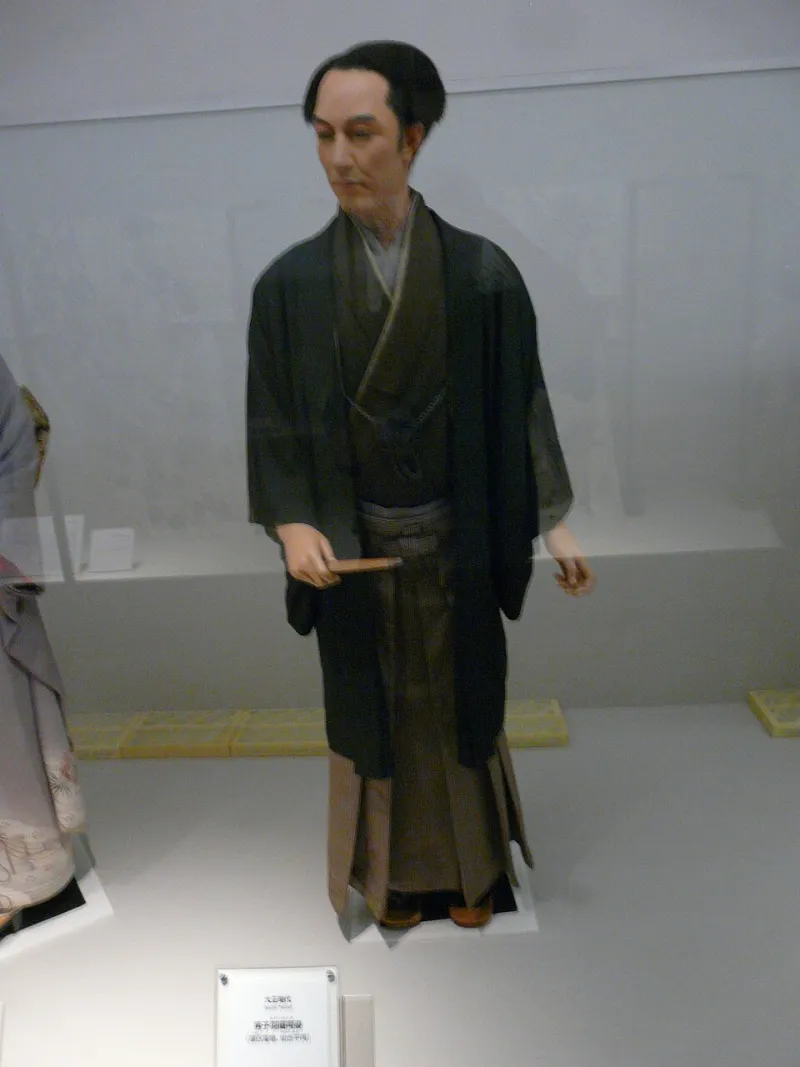
Photo: User:Piotrus, CC BY-SA 3.0, via Wikimedia Commons
A Warehouse of Unworn Splendor
In a storage facility on the outskirts of Kyoto, floor-to-ceiling shelves hold garments in colors that almost seem to hum — saffron, deep plum, vermilion shot through with gold thread. These are stage and ceremonial kimono, many of them decades old, purchased or rented for productions where they would be worn for a handful of performances and then folded away. They were built, in the truest sense, for the theater: dazzling under stage lights from fifty feet away, never intended to endure daily wear, let alone another century.
Japan's theater world is quietly paring down. Troupes dissolve, warehouses overflow, and younger costume designers increasingly favor new fabrication over inherited stock. What results is a gentle, largely unpublicized dispersal — retired garments moving through dealers, auctions, and personal connections to new owners abroad. A surprising number of them land in the United States.
One Garment's Journey
Consider the trajectory of one furisode-length stage kimono, its shoulders patterned with stylized waves in metallic thread. Sewn in the 1970s for a touring production, it appeared in perhaps forty performances before the company folded. It sat in storage for a generation. Two years ago, a costume archivist based in the American Midwest acquired it through a Kyoto dealer who specializes in what the trade calls yamato-uri — the quiet clearing of theatrical estates.
This spring, that kimono will appear on the stage of a regional opera company's production of Madama Butterfly, worn not as a replica of something Japanese, but as itself: an authentic garment with its own biography. The production's costume shop spent weeks preparing it — not restoring it to newness, but stabilizing it.
Repair as Interpretation
American conservators trained in textile preservation describe this work differently than Japanese craftsmen might. Where a Kyoto atelier might replace a worn lining wholesale, the opera house's team chose to document every fray, every water stain from an unknown production decades ago, and leave them visible under a protective underlayer.
"We're not pretending it hasn't lived," the shop's lead draper told me. "The wear is part of the costume. Our job is to make sure it can be seen once more without falling apart."
This philosophy — repair as a form of interpretation rather than erasure — sits comfortably within Japanese craft traditions, even if it arrived in this case by way of American museum practice. The garment is treated as evidence, not merely as material.
The Stewardship Question
Not everyone is comfortable with the trade. Some in Japan worry that theatrical garments, which carry the fingerprints of specific productions and performers, are being stripped of context when they cross the Pacific. A kimono worn by a particular onnagata in a particular revival is a document; in an American warehouse, it risks becoming a generic "Japanese costume."
The best practitioners on the US side take this seriously. The opera company's program notes will trace the garment's known history. The costume shop photographed its construction details and shared the files with a Japanese textile study group. It is a modest gesture, but it reflects a growing understanding that borrowing a garment means borrowing its story.
Built to Be Seen
There is a particular poignancy in a stage garment's second life. Clothing made for everyday use is judged by how it wears; clothing made for the stage is judged by how it reads from a distance, under light, in motion. When the lights come up on opening night and the audience sees those metallic waves catch the glare, the kimono will be doing exactly what it was made to do — just for a different audience, on a different continent, fifty years later.
The garment was never built to last. It was built to be witnessed. In that sense, every additional performance it survives is not preservation at all. It is simply the play, continuing.