When the Bow Falls Silent: The Quiet Journey of a Master's Instrument After Death
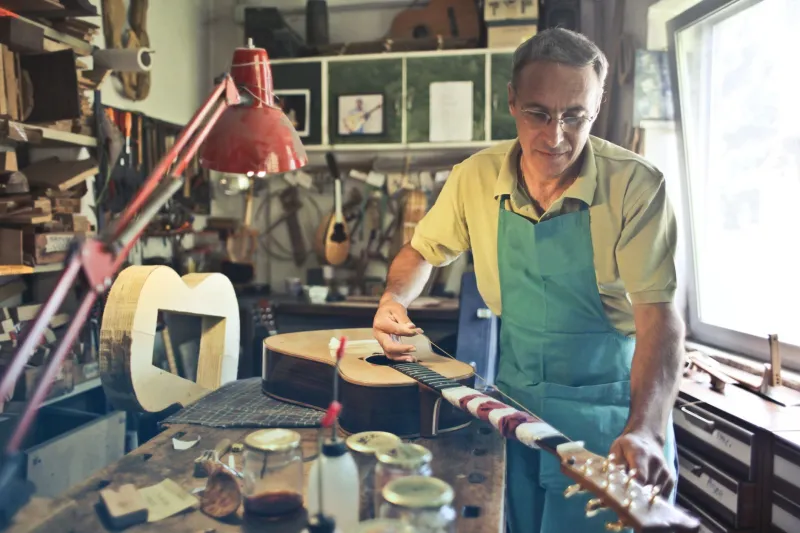
The Resting Year
In certain Japanese households, when a musician dies, the instrument does not immediately return to work. It is wiped down, strung or restrung with care, wrapped in cloth, and set aside — sometimes for a full year. This period of rest, quietly observed by families of shamisen and koto players, mirrors the memorial customs surrounding the deceased themselves. The instrument was a partner in a life's work. It is not furniture to be listed on an estate inventory.
American buyers encountering this tradition for the first time often describe it as unsettling in its intimacy. A dealer in Portland, Oregon, who asked to be identified only by his shop's name, Kanda Strings, recalls opening a shipping crate from Osaka and finding a handwritten note tucked beside a 1960s classical guitar: "My father played this every morning for forty years. Please let it sing again, but slowly." He kept the guitar in his back room for six months before offering it for sale.
A Market That Refuses to Call Itself a Market
There is no auction index for instruments descended from Japanese performers. Transactions happen through introductions — a student of a deceased teacher, a conservator at a university, a luthier who once repaired the instrument and is trusted with its future. Prices are negotiated with an unusual degree of hesitation, as if naming a figure too precisely would be a small act of disrespect.
Dealers in New York and Chicago describe a vetting process that runs in both directions. Buyers are questioned. Will the instrument be played? Will it be displayed under glass? Some sellers have declined higher offers in favor of lower ones from musicians over collectors. The logic is blunt and old-fashioned: an instrument that made music should keep making it.
The Conservator's Dilemma
American conservation practice leans toward preservation — stabilize the object, arrest its decay, document everything. But a wooden instrument is a contradiction. It was built to be stressed, breathed into, warmed by a body. Left untouched in ideal conditions, it can become acoustically inert, a beautiful corpse.
This tension is familiar to Kyoto-trained restorers, who have long distinguished between repairing an object and merely freezing it. When a conservator at a Midwest university received a suikinkutsu-maker's mallets and a well-worn shakuhachi from a donated estate, she chose to let students play the flute under supervision rather than seal it in a case. "A flute that is never blown is no longer a flute," she told the department. "It is a shape."
Provenance Without Pedestals
The question hovering over all of this is whether an instrument's history can be honored without turning it into a relic. American collecting culture tends toward the shrine: the certificate of authenticity, the climate-controlled vitrine, the story told more often than the strings are sounded. Japanese practice, by contrast, offers a different model — the concept of kuyō, memorial ceremonies held not only for people but for objects that have served faithfully. Sewing needles, dolls, even calligraphy brushes are thanked and retired with ceremony.
Some American luthiers have adapted this spirit informally. A workshop outside Asheville, North Carolina, holds a small gathering when it completes a restoration of a deceased player's instrument: the instrument is tuned, played once — a single piece, chosen by whoever knew the original owner — and then handed to its next caretaker. No plaque. No glass. Just a moment of acknowledgment that the object carries someone with it.
Playing Is a Form of Memory
What emerges from these scattered practices is a quiet consensus: the most respectful thing you can do with a dead musician's instrument is to keep it in service. Honoring does not require stillness. It requires use, maintenance, and the humility to understand that you are a custodian rather than an owner.
The guitar that arrived in Portland was eventually sold — to a young teacher, not a collector, and at a price the dealer admits was below market. She plays it in her classroom every day. The note from Osaka is framed on her wall. The instrument, it seems, was never really for sale. It was only ever being passed along.


