Dimming the Gallery: Six Museums Rethink What a Perfect Display Looks Like

Photo by Photo by EJ Li on Unsplash on Unsplash
Walk into the reinstalled ceramics wing at one of six American museums now experimenting with Japanese display philosophy, and your first instinct may be to check whether the lights are broken.
They are not. They are dim on purpose.
The Rebellion of the Uneven Shelf
For most of the last century, the American museum display followed rules inherited from department stores and dentists' offices: even lighting, symmetrical spacing, objects centered like portraits of important ancestors. The effect was authority. The side effect was sameness—a hundred vessels, each isolated on its own pedestal, each equally illuminated, none belonging to anything.
The new installations reject nearly all of it. Vessels cluster in irregular groups, some crowded together as they might have sat in a potter's drying shed. Lighting falls unevenly, leaving certain pieces half in shadow. One gallery in the Midwest deliberately leaves a case only two-thirds full. A wall label explains the emptiness in a single sentence and then, in the spirit of the thing, says nothing more.
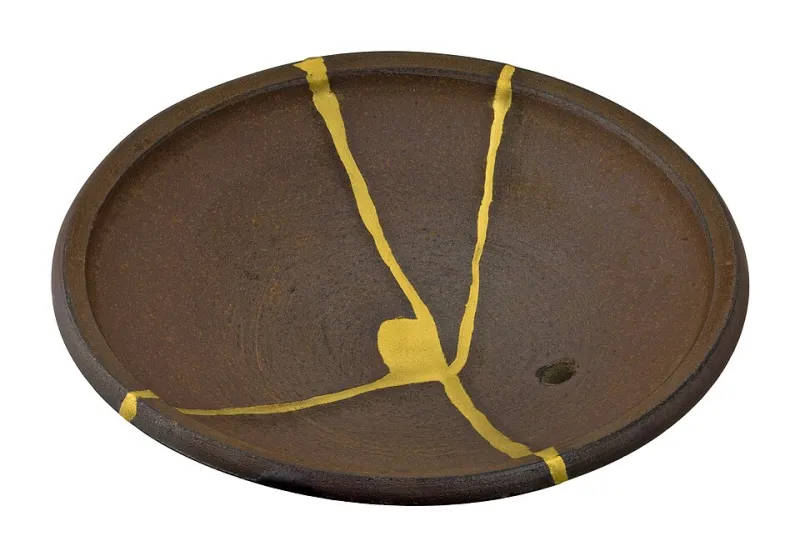
Curators describe the shift as a correction rather than a trend. The polished display, they argue, was never neutral—it imposed a Western ideal of completeness onto traditions, particularly Japanese ones, that were built around incompleteness, impermanence, and the beauty of the worn.
What Visitors Actually Do
The reactions have been instructive, and not always what the curators hoped.
Some visitors linger longer, drawn to the shadowed pieces the way one is drawn to a half-heard conversation. Others complain—to the front desk, to comment cards, to local papers—that the galleries look unfinished, that the lighting is disrespectful, that someone should fix it. A docent at one participating museum reports being asked, weekly, whether the museum is under construction.
There is a deeper complication. Several curators interviewed for this piece admitted to a worry that keeps them up at night: the risk of aesthetic flattening. If six institutions rehang their collections around the same borrowed sensibility, wabi-sabi stops being a philosophy and becomes a house style—another mood board, another word stripped of its weight, sitting on the shelf next to "hygge" and "lagom."
One curator put it with unusual candor: "The moment we put wabi-sabi on a wall vinyl, we had already done the thing wabi-sabi is against."
Translation Is a Lossy Process
The scholars consulted on these installations are careful about vocabulary. Wabi-sabi, as commonly used in the West, is itself a compression—two distinct concepts fused into a marketable shorthand for rustic charm. The tea masters who shaped these aesthetics were not designing a look; they were enacting a discipline of attention, restraint, and acceptance of transience.
Can a museum, an institution built on preservation and permanence, authentically display an aesthetic of impermanence? The participating museums have taken different stances. Some lean into contradiction, rotating pieces out regularly so that no display is final. Others accept that the institution will always imperfectly hold what it borrows—and argue that the imperfection is, fittingly, the point.
A Toolkit, Not a Costume
For working artists and designers, the most useful lesson from the museum experiment is not the dim lighting or the asymmetry—those are surface moves, easily copied and quickly exhausted. It is the underlying question the curators were forced to ask: what does this display assume, and who decided?
Every maker arranges something. A shelf, a portfolio, a website, a booth at a craft fair. The wabi-sabi galleries suggest a different set of defaults: leave one thing out. Let one piece go unlit. Let the arrangement admit that it was made by hands, which err.
Whether the institutional experiment succeeds will be decided slowly, in renewal rates and visitor surveys and the quiet judgment of other curators deciding whether to follow. But something has already shifted. Visitors who once walked past a chipped tea bowl under sterile light are now stopping in the half-dark, leaning in, and seeing the chip.
Seeing it, in the end, may be the whole practice.